Robert Abel and Associates (RA&A) was an American pioneering animation production company specializing in television commercials made with computer graphics. Founded by Robert Abel and Con Pederson in 1971, RA&A was especially known for their art direction and won many Clio Awards. Abel and his team created some of the most advanced and impressive computer-animated works of their time, including full ray-traced renders and fluid character animation at a time when such things were largely unknown. A variety of high-profile television advertisements, graphics sequences for motion pictures (including The Andromeda Strain and Tron), and work on laserdisc video games such as Cube Quest, put Abel and his team on the map in the early 1980s. The company was also originally commissioned to create the visual effects for Star Trek: The Motion Picture, but were subsequently taken off the project for mishandling funds. The company was also notable on its work for The Jacksons' 1981 music video "Can You Feel It." RA&A was on the southwest corner of Highland Avenue and Romaine in the heart of Hollywood, California. RA&A closed in 1987 following an ill-fated merger with now-defunct Omnibus Computer Graphics, Inc., a company which had been based in Toronto. Many people who worked at RA&A went on to other ground-breaking projects, including the founding of Wavefront Technologies, Rhythm & Hues and other studios. Many RA&A people went on to win Academy Awards.
Landmark point
In morphometrics, landmark point or shortly landmark is a point in a shape object in which correspondences between and within the populations of the object are preserved. In other disciplines, landmarks may be known as vertices, anchor points, control points, sites, profile points, 'sampling' points, nodes, markers, fiducial markers, etc. Landmarks can be defined either manually by experts or automatically by a computer program. There are three basic types of landmarks: anatomical landmarks, mathematical landmarks or pseudo-landmarks. An anatomical landmark is a biologically-meaningful point in an organism. Usually experts define anatomical points to ensure their correspondences within the same species. Examples of anatomical landmark in shape of a skull are the eye corner, tip of the nose, jaw, etc. Anatomical landmarks determine homologous parts of an organism, which share a common ancestry. Mathematical landmarks are points in a shape that are located according to some mathematical or geometrical property, for instance, a high curvature point or an extreme point. A computer program usually determines mathematical landmarks used for an automatic pattern recognition. Pseudo-landmarks are constructed points located between anatomical or mathematical landmarks. A typical example is an equally spaced set of points between two anatomical landmarks to get more sample points from a shape. Pseudo-landmarks are useful during shape matching, when the matching process requires a large number of points.
Ulead MediaStudio Pro
Ulead MediaStudio Pro (MSP) is real-time, timeline based prosumer level video editing software by Ulead Systems. It is a suite of 5 digital video and audio applications, including: Video Capture, Video Paint, CG Infinity, Audio Editor and Video Editor. MSP is only available on the Windows platform. Since version 8.0, CG Infinity and Video Paint are separate from the MSP suite, and are being sold as a combination product called VideoGraphics Lab (VGL). On June 18, 2008, Corel formally announced that MediaStudio Pro would be discontinued. The final MediaStudio Pro version was 8.10.0039 (Pro 8 Service Pack 1) released June 2, 2006. Corel discontinued support for MediaStudio Pro in June 2009. Version 6.0 is last version to support Windows 95, although recent versions are not compatible with Windows Vista or Windows 7. == Modules == There are 5 stand-alone modules in MSP before version 8.0, they are: Video Capture – The video capturing module in MSP. Video Paint – A frame-by-frame editor which can let user to make some image or hand-drawing effects on video frames. CG Infinity – A vector-based video editing tool which allows user to create logo animation or vector graphics on video frames. Audio Editor – The audio editing tool in MSP. It can utilize DirectX audio filters and Ulead audio filters to do audio effect processing. Video Editor – The module that users do video editing with audio/video effects. It can also utilize DirectX audio filters and 3rd party video filters to do the video editing. Since version 8.0, CG Infinity and Video Paint have been separated from the MSP suite and are being sold as a combination product called VideoGraphics Lab (VGL). == Editions == Ulead MediaStudio Pro had several editions before version 7.0. They are: Full edition: this edition includes all 5 modules. Director's Cut edition: this edition has 3 modules including Video Capture, Video Editor and Audio Editor. SE edition: SE means Simple Edition or Special Edition and is an OEM bundle version. It also includes the 3 modules as Director's Cut, however, is feature limited. Sometimes it will be given freely in video magazines. After version 7.0 only Full edition is available in the MSP suite. On June 18, 2008, Corel formally announced that MediaStudio Pro would be discontinued. == Release history ==
Anthrobotics
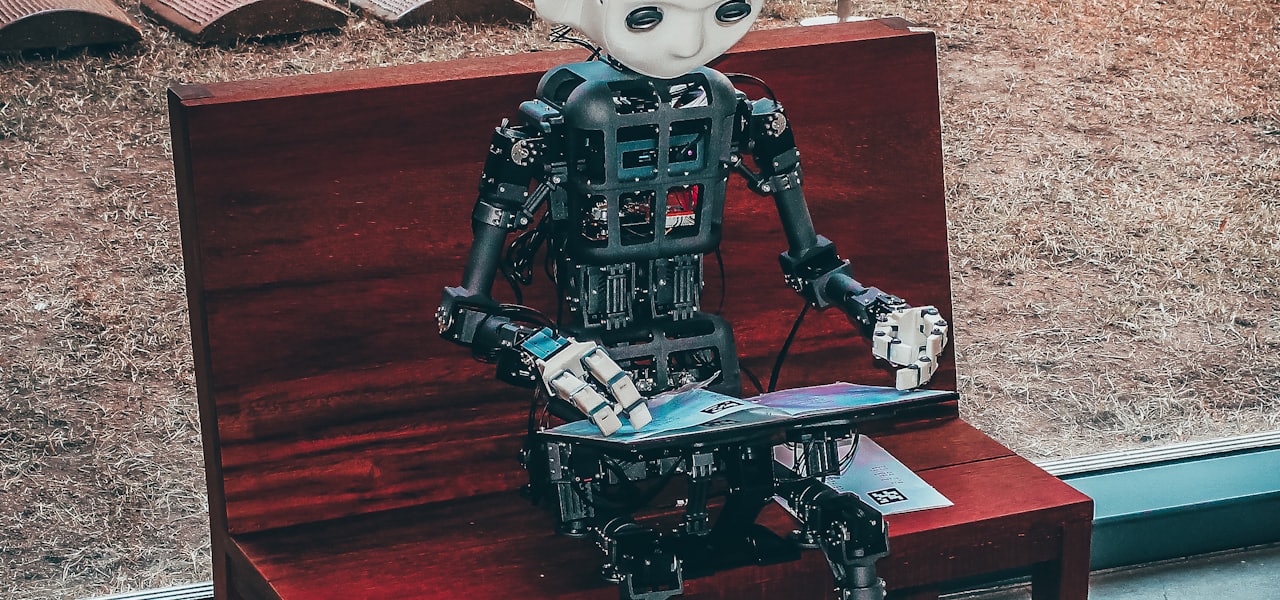
Anthrobotics is the science of developing and studying robots that are either entirely or in some way human-like. The term anthrobotics was originally coined by Mark Rosheim in a paper entitled "Design of An Omnidirectional Arm" presented at the IEEE International Conference on Robotics and Automation, May 13–18, 1990, pp. 2162–2167. Rosheim says he derived the term from "...Anthropomorphic and Robotics to distinguish the new generation of dexterous robots from its simple industrial robot forebears." The word gained wider recognition as a result of its use in the title of Rosheim's subsequent book Robot Evolution: The Development of Anthrobotics, which focussed on facsimiles of human physical and psychological skills and attributes. However, a wider definition of the term anthrobotics has been proposed, in which the meaning is derived from anthropology rather than anthropomorphic. This usage includes robots that respond to input in a human-like fashion, rather than simply mimicking human actions, thus theoretically being able to respond more flexibly or to adapt to unforeseen circumstances. This expanded definition also encompasses robots that are situated in social environments with the ability to respond to those environments appropriately, such as insect robots, robotic pets, and the like. Anthrobotics is now taught at some universities, encouraging students not only to design and build robots for environments beyond current industrial applications, but also to speculate on the future of robotics that are embedded in the world at large, as mobile phones and computers are today. In 2016 philosopher Luis de Miranda created the Anthrobotics Cluster at the University of Edinburgh "a platform of cross-disciplinary research that seeks to investigate some of the biggest questions that will need to be answered" on the relationship between humans, robots and intelligent systems and "a think tank on the social spread of robotics, and also how automation is part of the definition of what humans have always been". to explore the symbiotic relationship between humans and automated protocols.
Layers (digital image editing)
Layers are used in digital image editing to separate different elements of an image. A layer can be compared to a transparency on which imaging effects or images are applied and placed over or under an image. Today they are an integral feature of image editors. In the early days of computing, memory was at a premium and the idea of using multi-layered images was considered infeasible in personal computer applications as the tradeoffs were image size and color depth. As the price of memory fell it became feasible to apply the concept of layering to raster images. The first software known to apply the concept of layers was LALF, which was released in 1989 for the NEC PC-9801. LALF's terminology for layers is "cells", after the concept of drawing animation frames over-top of a stencil. Layers were introduced in Western markets by Fauve Matisse (later Macromedia xRes), and then available in Adobe Photoshop 3.0, in 1994, which lead to widespread adoption. In vector image editors that support animation, layers are used to further enable manipulation along a common timeline for the animation; in SVG images, the equivalent to layers are "groups". == Layer types == There are different kinds of layers, and not all of them exist in all programs. They represent a part of a picture, either as pixels or as modification instructions. They are stacked on top of each other, and depending on the order, determine the appearance of the final picture. In graphics software, layers are the different levels at which one can place an object or image file. In the program, layers can be stacked, merged, or defined when creating a digital image. Layers can be partially obscured allowing portions of images within a layer to be hidden or shown in a translucent manner within another image. Layers can also be used to combine two or more images into a single digital image. For the purpose of editing, working with layers allows for applying changes to just one specific layer. == Layer (basic) == The standard layer available to most programs consists of a rectangular, semitransparent picture which may be superimposed over other layers. Some programs require that layers cover the same area as the final canvas, but others offer layers of multiple sizes. Each layer may bear individual settings, such as opacity, blending modes, dynamic filters, and potentially hundreds of other properties. == Layer mask == A layer mask is linked to a layer and hides part of the layer from the picture. What is painted black on the layer mask will not be visible in the final picture. What is grey will be more or less transparent depending on the shade of grey. As the layer mask can be both edited and moved around independently of both the background layer and the layer it applies to, it gives the user the ability to test a lot of different combinations of overlay. == Adjustment layer == An adjustment layer typically applies a common effect like brightness or saturation to other layers. However, as the effect is stored in a separate layer, it is easy to try it out and switch between different alternatives, without changing the original layer. In addition, an adjustment layer can easily be edited, just like a layer mask, so an effect can be applied to just part of the image.
Zynn
Zynn was a Chinese video-sharing social networking service owned by Kuaishou, a Beijing-based internet technology company established in 2011 by Su Hua and Cheng Yixiao. It was used to create and share short videos, and it pays its users for using the app and referring others. Zynn was launched on May 7, 2020. It became the most-downloaded app in the App Store in the same month. It has also been criticized for being a "pyramid scheme", and it has faced accusations of plagiarism and stealing content. Aside from Zynn in North America, Kuaishou is available under the name Kwai in Russia, South Korea, Japan, Thailand, Vietnam, Philippines, Malaysia, Indonesia, Brazil, America, India, and the Middle East. Kwai used to be available in Australia and the United States on the App Store, but was removed at an unknown date. Zynn was permanently shut down on the 20th of August, 2021. == History == In 2011, entrepreneur Su Hua co-founded Kuaishou with business partner Cheng Yixiao. Originally a GIF-making app, Kuaishou soon moved to short video content. Su Hua also serves as the current Kuaishou CEO. In December 2019, Chinese internet conglomerate Tencent invested $2 billion in Kuaishou, reportedly to compete with rival ByteDance. In December 2019, Kuaishou acquired an app developer called Owlii, which is the developer of Zynn. Zynn was developed to be a North American Market edition of Kuaishou. On May 7, 2020, the app was launched and it was downloaded over 2 million times in that month. On May 12, 2020, Kuaishou filed a lawsuit seeking compensation for "unfair competition", and accused Douyin, the sister app of TikTok, of "interfering" with search results on app stores. Zynn shut down on the 20th of August, 2021. == Features == Zynn allows its users to create, edit and share short videos of themselves. Its interface has been described as a "complete clone" of TikTok, its main competitor. The Zynn app was unique in the way that they paid users for using the platform. Each user earned $1 for signing up, and they could earn money for referring users to the platform. Watching videos resulted in earning "points", which could be redeemed for gift cards or be cashed out via PayPal.[1] == Criticisms and controversies == Multiple TikTok users had reported seeing their entire accounts plagiarized, with one account pretending to be Addison Rae. Despite being launched in May, many videos were posted in February. Zynn has employed "intermittent variable rewards" in its point system, which has been criticized as being the "same reinforcement strategy used to addict people to slot machines". Cash payouts for using the app have resulted in criticism and accusations of anti-competitive behavior. The app was taken down from the Google Play store on June 10. Zynn blamed it on an "isolated incident". Six days later, it was taken down from the App Store as well. US Senator Josh Hawley has criticized the platform, calling it "predatory" and "anti-competitive" in a letter to the Federal Trade Commission asking for an investigation into Zynn. He said "[Zynn] smacks of a textbook predatory-pricing scheme, one calculated to attain immediate market dominance for Zynn by driving competitors out of the market."
Butler in a Box
Butler in a Box was an early voice-controlled home automation device developed in 1983 by magician Gus Searcy and programmer Franz Kavan. The device allowed users to control various home electronics, such as lights and phones, using voice commands. It predated modern smart speakers and virtual assistants by several decades. == History == The idea for the Butler in a Box originated in 1983 when Searcy was asked by friends why he couldn't simply command lights to turn on and off if he could pull rabbits out of hats, given his background as a professional magician. Searcy partnered with former IBM programmer Kavan to develop the device, with their first prototype being named "Sidney". The Butler in a Box combined remote control technology with voice recognition to enable control of home devices. However, it faced challenges due to the technological limitations of the era and its high price point of nearly $1,500 (equivalent to around $3,700 in 2021). == Features and functionality == Users could activate the Butler in a Box by speaking a wake word, typically a traditional butler name, and the device would address the user as "boss". It was capable of performing tasks such as: Turning lights on and off, controlling individual zones if lights were connected to remote control modules Making and receiving phone calls Setting timers Pairing with sensors to function as a security alarm system However, the device required extensive voice training for each user, a time-consuming process compared to modern voice recognition. Additionally, settings and trained commands would be lost if power was out for over 3 hours due to the volatile memory technology used at the time. == Reception and legacy == While innovative for its time, the Butler in a Box did not achieve widespread commercial success due to its high price and the technical limitations of the 1980s. Nevertheless, it served as an important early step in the development of home automation and showcased the potential for voice-controlled technology to enhance accessibility and convenience in the home. Decades later, products like Amazon Alexa, Google Home, and Apple's Siri would make voice-controlled smart home devices commonplace and affordable, building on the groundwork laid by early attempts like the Butler in a Box.